

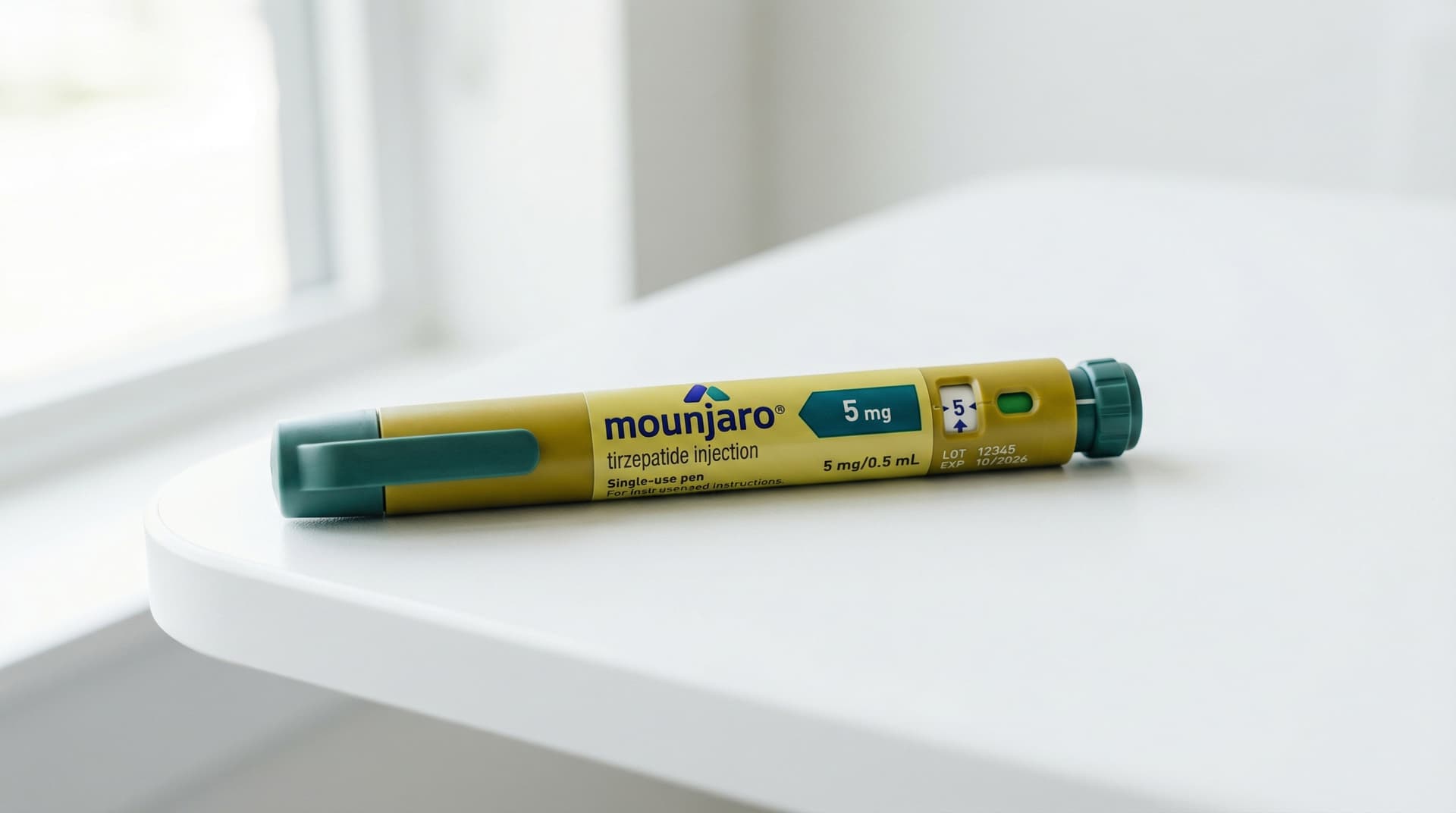
Yes — Zepbound and Mounjaro are the exact same drug. Same active ingredient (tirzepatide), same manufacturer (Eli Lilly), same milligram strengths, same auto-injector pen. The only difference is the FDA-approved label: Mounjaro is approved for type 2 diabetes, while Zepbound is approved for chronic weight management.
That distinction matters enormously for your cost and insurance coverage. A patient with type 2 diabetes can get tirzepatide as Mounjaro for under $30/month copay on many insurance plans. A patient with obesity (but no diabetes) usually pays $549/month or more for the same molecule labeled as Zepbound. Here's exactly why that happens and how to navigate it in 2026.
Are Zepbound and Mounjaro the same drug?
Yes, chemically identical. Both are tirzepatide — a dual GIP/GLP-1 receptor agonist molecule developed by Eli Lilly. The chemistry is indistinguishable. The pens are virtually identical (different label color, same mechanism, same dose dial). Both are administered as a once-weekly subcutaneous injection.
Side-by-side facts:
- Active ingredient: Tirzepatide (both)
- Manufacturer: Eli Lilly (both)
- Dose strengths: 2.5 mg, 5 mg, 7.5 mg, 10 mg, 12.5 mg, 15 mg (both)
- Administration: Weekly subcutaneous auto-injector pen (both)
- Approved year: Mounjaro May 2022, Zepbound November 2023
- FDA-approved use: Mounjaro = type 2 diabetes; Zepbound = chronic weight management (BMI ≥30, or ≥27 with weight-related comorbidities)
If a pharmacist gave you a Zepbound pen and a Mounjaro pen, the only way to tell them apart would be the label. The molecule, the injection device, and the clinical effect are the same.
Why does Eli Lilly sell the same drug under two different names?
This is standard pharmaceutical industry practice — and it's not unique to tirzepatide. Novo Nordisk does the same thing with semaglutide: Ozempic is the diabetes label, Wegovy is the weight management label. Liraglutide: Victoza for diabetes, Saxenda for weight management.
The reasons:
- Separate FDA approvals. Each indication requires its own clinical-trial package and labeling. The FDA approves drugs for specific uses, not for the molecule generically.
- Pricing flexibility. Insurance plans cover diabetes drugs differently than weight-loss drugs. Splitting the brand lets the manufacturer set different prices for different payers.
- Marketing. Healthcare professionals prescribe Mounjaro through endocrinology and primary-care diabetes pathways; they prescribe Zepbound through obesity-medicine and weight-management pathways. Separate branding reinforces those channels.
- Supply allocation. During the 2023–2024 tirzepatide shortage, Eli Lilly prioritized Mounjaro for diabetes patients. Having separate SKUs let them ration each label independently.
The pharmacology is identical. The business model is what's split.
Mounjaro vs Zepbound: cost in 2026
This is where the same-drug, different-name reality bites — or saves you, depending on which label you have access to.
If you have type 2 diabetes (Mounjaro)
- List price: $1,069/month
- Insurance copay: typically $25–$30/month if covered as a Tier 2 diabetes drug
- Mounjaro Savings Card: as little as $25/month for commercially insured patients
- LillyDirect Mounjaro: not available — Lilly's direct-pay program is Zepbound-only for cash payers
If you have obesity (Zepbound)
- List price: $1,089/month
- Insurance copay: typically $25–$200/month if covered (many plans require prior authorization and BMI documentation)
- Self-pay vials (LillyDirect): $349 (2.5 mg) to $549 (15 mg) per month — significantly cheaper than the auto-injector pens
- Foundayo (oral tirzepatide pill): $149/month — FDA-approved April 2026, shipping via LillyDirect
For full state-by-state cost data including Medicaid coverage, see our Zepbound cost analysis.
The kicker: the same molecule, prescribed via the diabetes pathway, costs roughly $25/month. Prescribed via the obesity pathway, it costs $549/month minimum (without insurance). That's a 22× price difference for chemically identical drug.
Can I take Mounjaro for weight loss?
Technically yes (off-label), but practically harder than you'd think. Three scenarios:
- You have type 2 diabetes AND obesity. Easy. Your doctor prescribes Mounjaro for the diabetes diagnosis, and the weight loss comes along for free. This is the cheapest path to tirzepatide for weight loss in 2026.
- You have pre-diabetes or insulin resistance but not type 2 diabetes. Some endocrinologists will prescribe Mounjaro off-label here, citing metabolic-syndrome guidelines. Coverage varies — many insurers deny Mounjaro without a confirmed type 2 diabetes diagnosis (HbA1c ≥6.5%, fasting glucose ≥126, or 2-hour OGTT ≥200).
- You have obesity but normal blood sugar. Most prescribers won't write Mounjaro for you off-label, and even if they do, insurance will deny it. You'll need Zepbound (or compounded tirzepatide — see below).
Important: prescribers who write Mounjaro for patients without diabetes are taking on real liability if the FDA, the state board, or insurance auditors scrutinize the prescribing pattern. Don't pressure them.
Compounded tirzepatide: the cheapest legitimate path
This is where many cash-pay weight-loss patients have ended up in 2025–2026. Compounded tirzepatide — made by 503A/503B compounding pharmacies — is the same molecule, priced $99–$299/month depending on provider.
Important caveats:
- The FDA briefly allowed compounded tirzepatide during the 2023–2024 shortage. That shortage resolved in late 2024, and the FDA has been actively cracking down on unsafe compounders since.
- Compounded tirzepatide is legal to prescribe and dispense when it's medically necessary and patient-specific (the standard 503A test), but the FDA enforces aggressively against pharmacies producing it at scale or making safety/quality claims they can't back up.
- See our FDA compounding crackdown update for the active enforcement list.
Providers our readers most frequently report success with for tirzepatide (compounded or brand), in our most recent comparison:
- Eden Health — Board-certified physicians, prescribes both Zepbound (insured paths) and compounded tirzepatide. Comprehensive baseline labs.
- ShedRx — Compounded tirzepatide programs, transparent pricing, LegitScript-certified.
- TrimRx — Personalized doctor consultations, willingness to prescribe both Zepbound and compounded alternatives.
- Yucca Health — LegitScript-certified, BNPL financing for cash-pay patients.
- Ro — Only prescribes FDA-approved Zepbound and Mounjaro (not compounded). Higher cost, but no compounding-related risk.
For our full ranking including pricing tiers, credentialing, and which providers prescribe brand vs compounded, see our best GLP-1 telehealth programs list.
Should I switch from Mounjaro to Zepbound (or vice versa)?
The molecule is the same, so there's never a *clinical* reason to switch. The reasons to switch are administrative:
- Insurance change. If your insurer covers one but not the other, switch labels (not molecules). Get your prescriber to rewrite the same dose, just under the other label.
- Diagnosis change. If you developed type 2 diabetes while on Zepbound, your insurer may now cover Mounjaro at a lower copay — request the switch.
- Self-pay program. If you're paying cash and want the cheaper LillyDirect vials, your prescription needs to be written as Zepbound, not Mounjaro. The vial program is Zepbound-only.
What you should not do:
- Take both at the same time. They're the same molecule — you'd be double-dosing tirzepatide, dramatically increasing adverse-event risk.
- Switch back and forth based on cost alone without telling your prescriber. The titration history matters; restarting the ladder unnecessarily means new side effects.
How does this compare to Wegovy?
Wegovy is semaglutide — a different molecule from tirzepatide (Mounjaro/Zepbound). For the head-to-head clinical and cost comparison, see our Is Zepbound Better Than Wegovy? 2026 guide.
Short version: in the head-to-head SURMOUNT-5 trial, tirzepatide (Mounjaro/Zepbound) produced ~20% mean weight loss vs ~14% for semaglutide (Wegovy). Tirzepatide is the more potent molecule — which is why the "same molecule, different label" arbitrage matters so much.
Frequently asked questions
Are Zepbound and Mounjaro the same chemically? Yes. Both are tirzepatide. Same molecular formula (C225H348N48O68), same manufacturer, same dose strengths.
Is tirzepatide the same as Mounjaro? Tirzepatide is the generic (chemical) name of the active ingredient. Mounjaro and Zepbound are both brand names for tirzepatide — Mounjaro for diabetes, Zepbound for weight management.
Can I use my Mounjaro for weight loss? If you have diabetes and a prescription for Mounjaro, the weight loss is a clinical benefit your prescriber is monitoring. You don't need a separate prescription for weight loss. If you don't have diabetes, your prescriber and insurer will usually push you toward Zepbound instead.
Is Mounjaro cheaper than Zepbound? With insurance and a diabetes diagnosis, yes — typically by an order of magnitude. Without insurance, the LillyDirect Zepbound vial program ($349–$549/month) is cheaper than cash-pay Mounjaro pens, which run $1,069/month list.
Does Medicare cover Mounjaro or Zepbound? Medicare Part D currently covers Mounjaro for patients with type 2 diabetes. Zepbound coverage for obesity is changing under the CMS GLP-1 Bridge program launching July 1, 2026 — see our Medicare GLP-1 Bridge Program guide.
Can I get a compounded version of tirzepatide? Legally, yes, when prescribed for medical necessity. Practically, the FDA has tightened enforcement since the shortage resolved. Use a LegitScript-certified provider. See our provider screening guide.
Will the same dose of Mounjaro and Zepbound produce the same weight loss? Yes. Same molecule, same dose = same effect. The brand name doesn't change anything biological.
Bottom line
Zepbound and Mounjaro are the same drug. Same molecule, same manufacturer, same dose strengths, same clinical effect. The split exists for regulatory and pricing reasons, not pharmacological ones.
What that means practically in 2026:
- If you have type 2 diabetes: Mounjaro is your path. Cheapest route to tirzepatide, period.
- If you have obesity without diabetes: Zepbound or compounded tirzepatide. LillyDirect vials at $349–$549/month, or Foundayo at $149/month if you want the oral pill, are the cheapest legitimate brand options.
- Don't try to game the system by getting a Mounjaro prescription without a diabetes diagnosis. Insurance will deny it, prescribers won't write it sustainably, and the FDA monitors prescribing patterns.
For the full comparison of every GLP-1 option in 2026 — cost, mechanism, side effects, and how to pick — see our Wegovy vs Zepbound head-to-head and our GLP-1 price war breakdown.